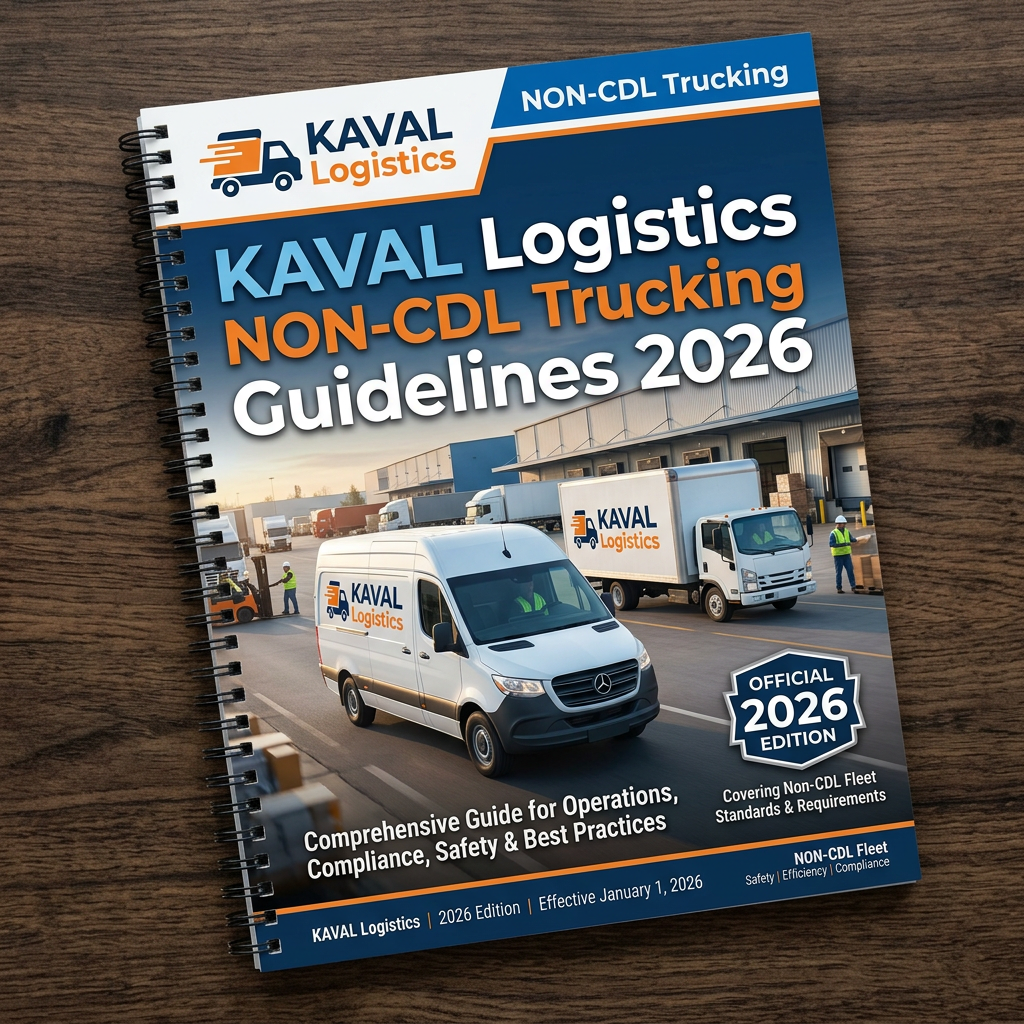
🚛 The 2025–2026 Non-CDL Trucking Startup Guide Is Here — And It’s Everything New Owners Need

You don’t need a CDL to build a profitable trucking or delivery business. You do need a plan.
The trucking and logistics industry is booming — and one of the fastest-growing entry points is the non-CDL space. Box trucks, sprinter vans, and cargo delivery rigs under 26,000 lbs GVWR are putting thousands of new entrepreneurs on the road every year, no commercial driver’s license required.
But starting without the right roadmap? That’s where most new owners stall out, overspend, or make costly compliance mistakes.
That’s why KAVAL Logistics created the 2025–2026 Non-CDL Trucking Startup Guide — a complete, step-by-step digital resource designed specifically for new trucking and delivery business owners who want to launch smart, stay legal, and grow with confidence.
What Is the 2025–2026 Non-CDL Trucking Startup Guide?
This is not a generic overview. It’s an actionable, up-to-date guide built around the real requirements, real costs, and real decisions you’ll face in 2025 and 2026.
Whether you’re looking to run last-mile deliveries, haul freight on load boards, launch a box truck fleet, or operate under your own authority — this guide covers it all.
What’s Inside the Guide
Here’s a breakdown of what you’ll find when you open the 2025–2026 Non-CDL Trucking Startup Guide:
✅ Business Formation & Legal Setup
- How to structure your LLC and protect your personal assets
- Getting your EIN (it’s free — and takes 5 minutes)
- State-specific registration requirements for non-CDL carriers
✅ FMCSA Authority & DOT Compliance
- When you need a USDOT number (hint: if your truck is over 10,001 lbs GVWR, you do)
- How to apply for MC operating authority — step by step
- BOC-3 filing explained in plain English
- Intrastate vs. interstate rules and what they mean for your business
✅ Truck Selection & GVWR Rules
- How to choose between a 16 ft, 20 ft, and 26 ft box truck based on your business model
- The GVWR rule that keeps you in non-CDL territory — and what happens if you miss it
- What to look for in a pre-purchase inspection
- Financing vs. buying outright: what makes sense for new operators
✅ Commercial Insurance Breakdown
- What coverage you actually need: primary liability, cargo, and physical damage
- What to expect to pay in Year 1 ($4,000–$12,000 range for a single non-CDL truck)
- How to compare carriers and avoid gaps in coverage
✅ Finding Freight & Getting Paid
- Load boards, Amazon Relay, and contracted delivery programs
- How freight factoring works and when to use it
- Building cash reserves for the gap between delivery and invoice payment
✅ First-Year Financial Projections
- Realistic startup costs: $10,000–$35,000 depending on your model
- Sample P&L for your first year of operations
- Cost-per-mile calculations and break-even targets
- Common money mistakes new owners make — and how to avoid them
Who Is This Guide For?
The 2025–2026 Non-CDL Trucking Startup Guide was built for:
- Aspiring trucking entrepreneurs who want to enter the industry without a CDL
- Delivery business owners looking to move beyond gig work and build a real operation
- Side hustlers going full-time with a box truck or cargo van
- Small fleet builders planning their first or second truck
- Veterans, career changers, and first-time business owners stepping into logistics for the first time
If you’ve been thinking about starting a trucking or delivery business but didn’t know where to begin — this guide is your starting point.
Why KAVAL Logistics Created This Guide
At KAVAL Logistics, we’ve seen too many motivated, capable entrepreneurs lose time and money because they didn’t have access to clear, accurate, and current information. The rules change. The costs change. And what worked in 2022 may not be the right approach heading into 2026.
We created this guide because we believe that a well-informed owner is a successful owner — and the trucking industry needs more of them.
Our goal is simple: help you launch faster, spend smarter, and avoid the mistakes that derail most new operators in their first year.
What Makes This Guide Different
| Other Resources | KAVAL’s 2025–2026 Guide |
|---|---|
| Generic overviews | Step-by-step action items |
| Outdated regulations | 2025–2026 FMCSA-current requirements |
| Vague cost estimates | Real dollar figures and ranges |
| No compliance guidance | Full authority and DOT walkthrough |
| One-size-fits-all advice | Tailored to non-CDL operators specifically |

Getting Started in Trucking: 2025–2026 Edition (Digital Guide)
Start your trucking business the right way with this step‑by‑step 2025–2026 digital guide covering business setup, compliance, insurance, load boards, and proven income strategies. Instant download.
Leave a Reply